
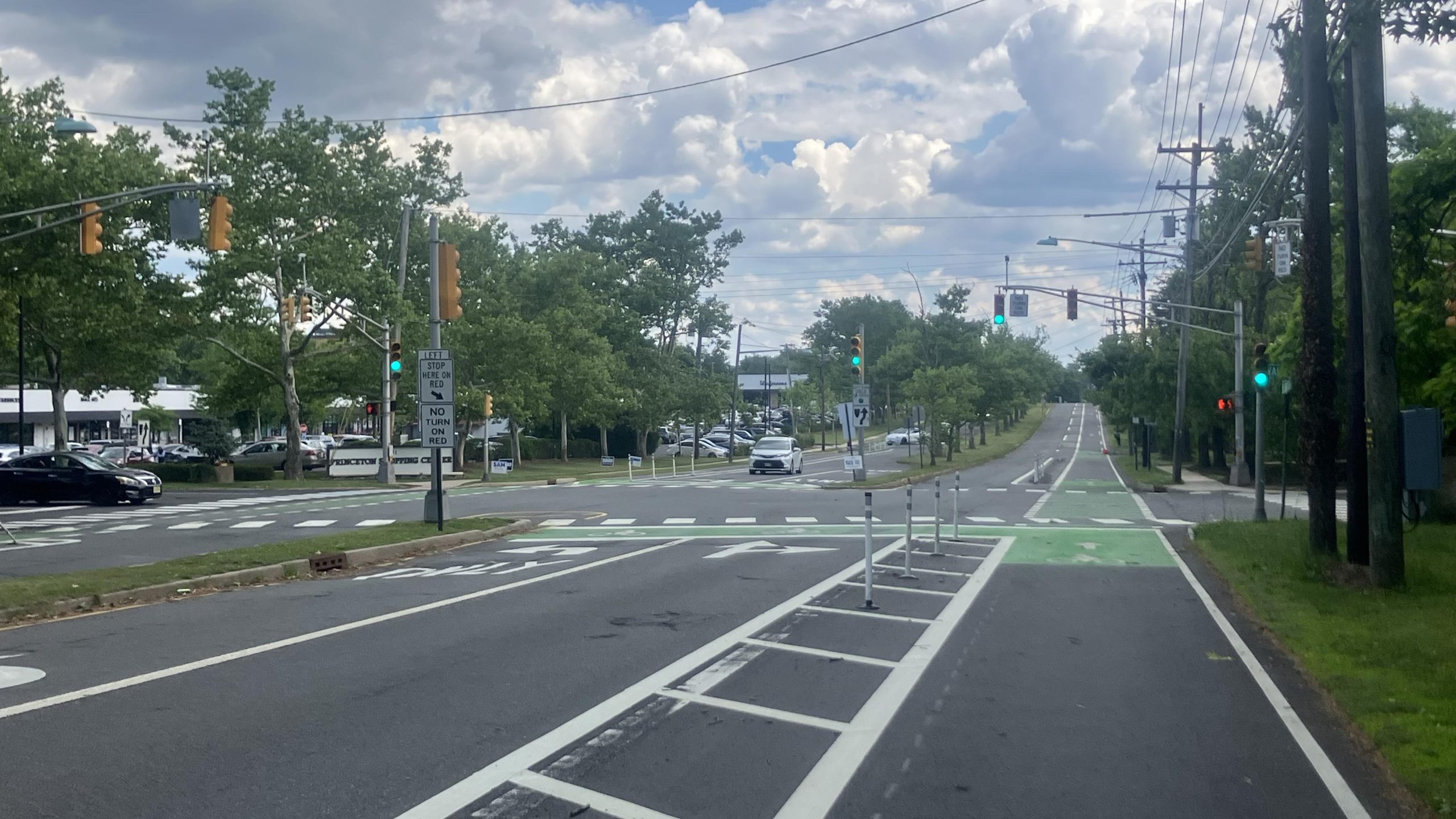
On Sunday, June 7, Walk Bike Princeton hosted a community walking and biking tour of the bike lanes and pedestrian infrastructure on North Harrison Street and around the Princeton Shopping Center. Participants explored what is working well, what still feels unsafe, and what improvements would make the area safer and more comfortable for people walking, biking, driving, taking transit, and traveling to school.
The discussion was energetic and practical. Participants appreciated the progress represented by the bike lanes on North Harrison Street, but also identified several gaps that still make the area difficult to navigate. The message was clear and strong: isolated improvements are helpful, but Princeton needs a connected network of safe crossings, sidewalks, bike lanes, traffic-calmed streets, and well-maintained public spaces.
More resources…
- WBP Memo to Mayor and Council with detailed recommendations for safer biking and walking infrastructure.
- WBP Letter to the Editor of Town Topics
- WBP Letter to the Editor of TAPintoPrinceton
Safer Intersections and Crossings
Several intersections stood out as priorities for improvement. Participants recommended Leading Pedestrian Intervals at Valley Road and Terhune Road, so pedestrians can begin crossing before turning vehicles move through the intersection. The group also discussed the need to make the Walgreens entrance safer for pedestrians and to improve the Harrison/Hamilton intersection, where drivers often appear to speed up.
Within the Princeton Shopping Center itself, participants suggested adding more stop signs and considering four-way stops at key locations. Better defined circulation, slower speeds, and more predictable crossings would make the shopping center safer for everyone, especially families, older residents, and people walking between stores, bus stops, and nearby neighborhoods.
Participants also called for raised crosswalks connecting Grover Park to the shopping center, and other traffic-calming measures in high-use pedestrian areas around the park. These improvements would make crossings more visible, slow vehicle speeds in the parking lot, and help drivers expect people walking and biking.
A More Complete Sidewalk Network
The group identified several sidewalk gaps that should be addressed. One important recommendation was adding sidewalks on the west side of Harrison Street. Participants also discussed the need for sidewalks throughout the Terhune Road corridor and better sidewalk connections near Grover Park.
At the same time, participants emphasized that wider sidewalks should not come at the expense of losing green buffers. Grass, trees, and planting strips help separate pedestrians from traffic and make walking more pleasant. Future improvements should aim for both safety and comfort: better sidewalks, safer crossings, and preserved green space wherever possible.
The group also discussed the potential value of a PFARS-area cut-through or shortcut to improve walking and biking access through the neighborhood and shopping center area. As one participant put it, this type of connection could have “no negative impact; no one loses, many gain.”
Continuous and Connected Bike Lanes
Participants strongly supported the idea that bike lanes should be added whenever a road is repaved. Repaving projects are a key opportunity to improve safety at relatively low cost, and Princeton should not miss those opportunities.
The group also discussed the need for continuous bike lanes from Terhune Road toward Route 1, and better connections through the North Harrison corridor. A bike lane that appears and disappears is much less useful than one that connects people safely to schools, parks, stores, workplaces, and transit.
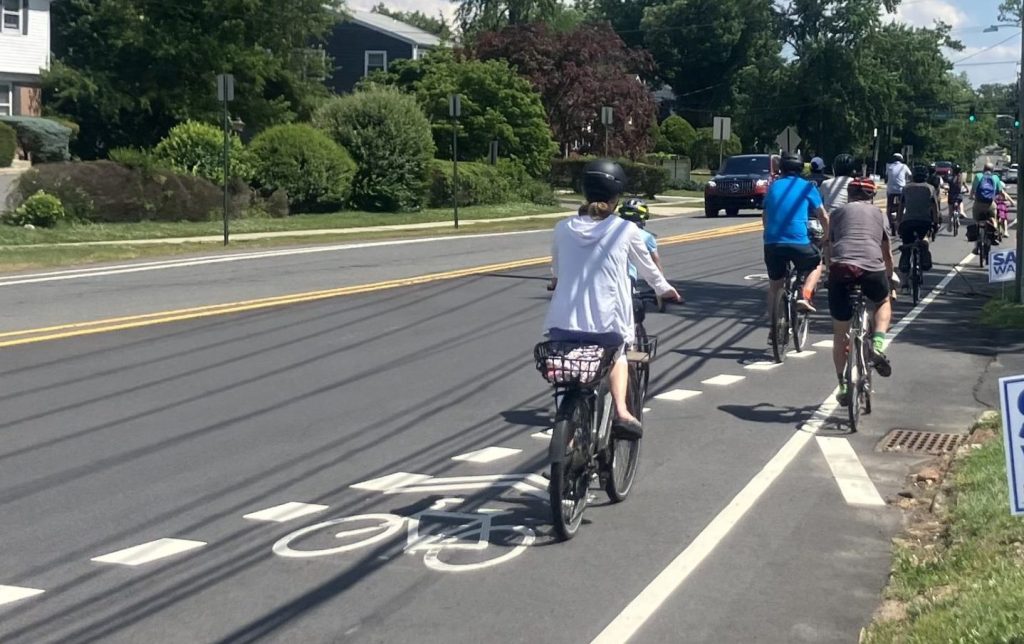
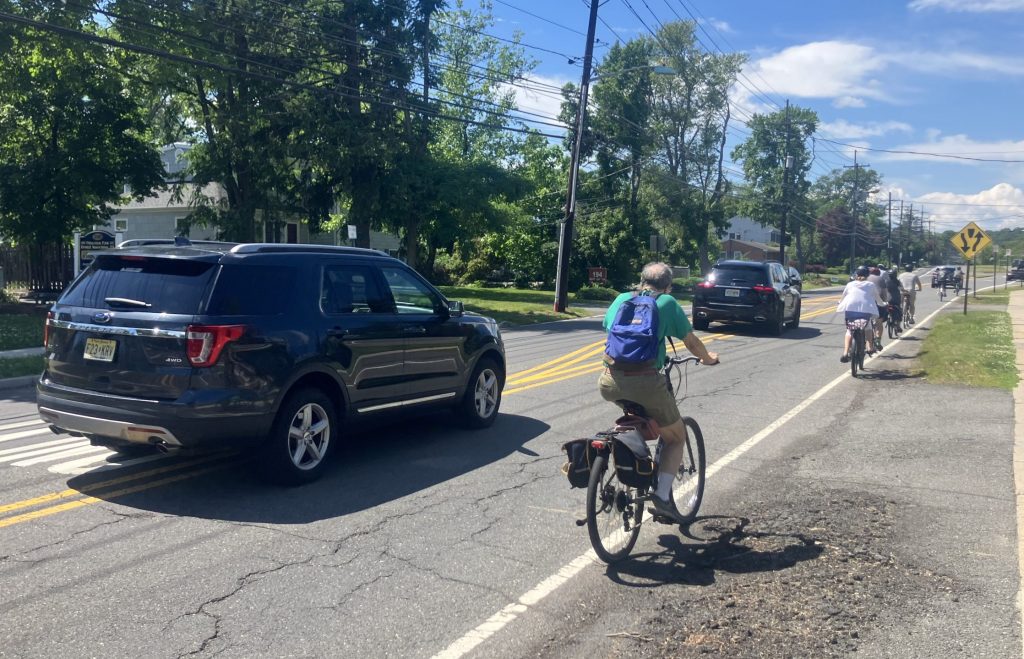
On the Terhune stretch adjacent to The Alice, participants suggested moving bike lanes between the parking land and the sidewalk where feasible. The group also discussed one-way street designs and ways to allow safe two-way bicycle travel on streets that are one-way for cars. In some locations, this could be done with paint, signage, and reconfigured space rather than major reconstruction.
Lower Speeds and Traffic Calming
Participants agreed that lower vehicle speeds are essential to safety. A 20 mph speed limit is appropriate, especially around schools, parks, shopping areas, and residential streets. But speed limits alone are not enough. Street design should make slower driving feel natural.
Recommended traffic-calming measures included raised crosswalks, narrowed travel lanes, improved crossings, stop signs where appropriate, and redesigned entrances and intersections. Participants also discussed the need to repave Harrison Street and improve pavement conditions in and near bike lanes.
The group also raised questions about roundabouts and bicycle safety, noting that roundabout circulation must be designed carefully so that people biking and walking are protected and visible.
School Safety
School safety was a major theme. Participants discussed the need to address traffic around Princeton High School and Princeton Middle School, improve sidewalks near schools, and consider car-free or limited-car zones around school entrances at arrival and dismissal times.
Data from the Princeton Mobility Study (figure 1) shows that our children use Harrison Street every day to get to and from school, and it is one of the main corridors where PHS students said they would like to see bike lanes (figure 2).
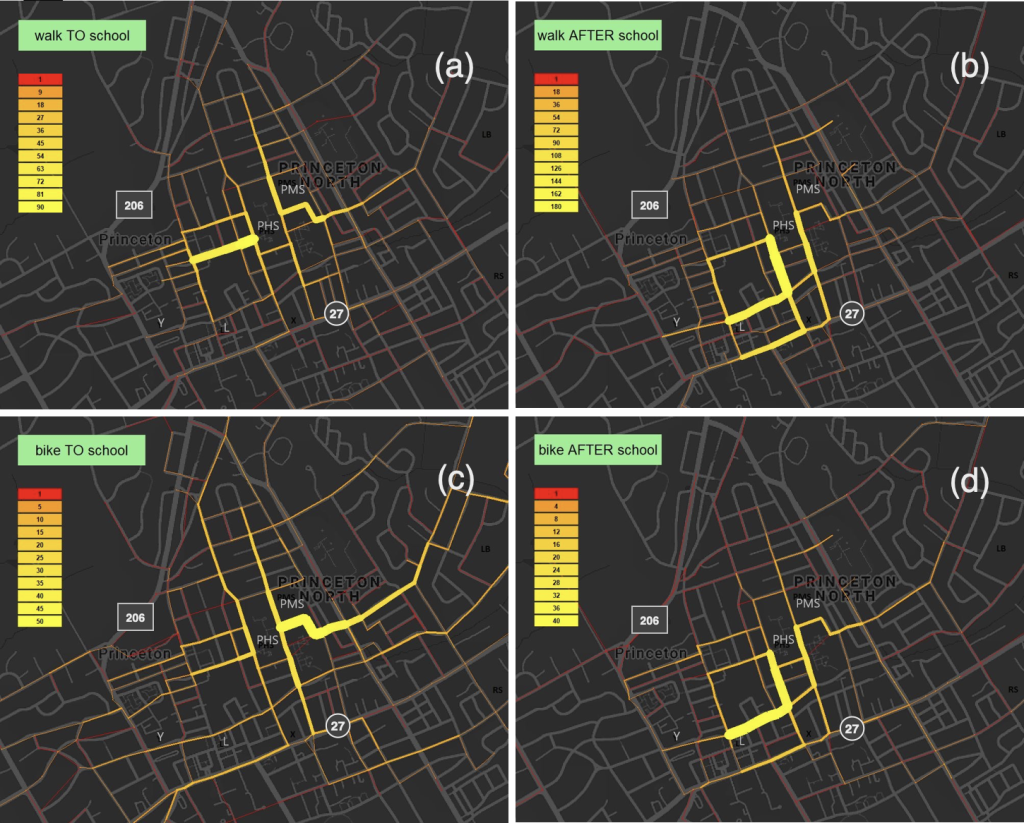
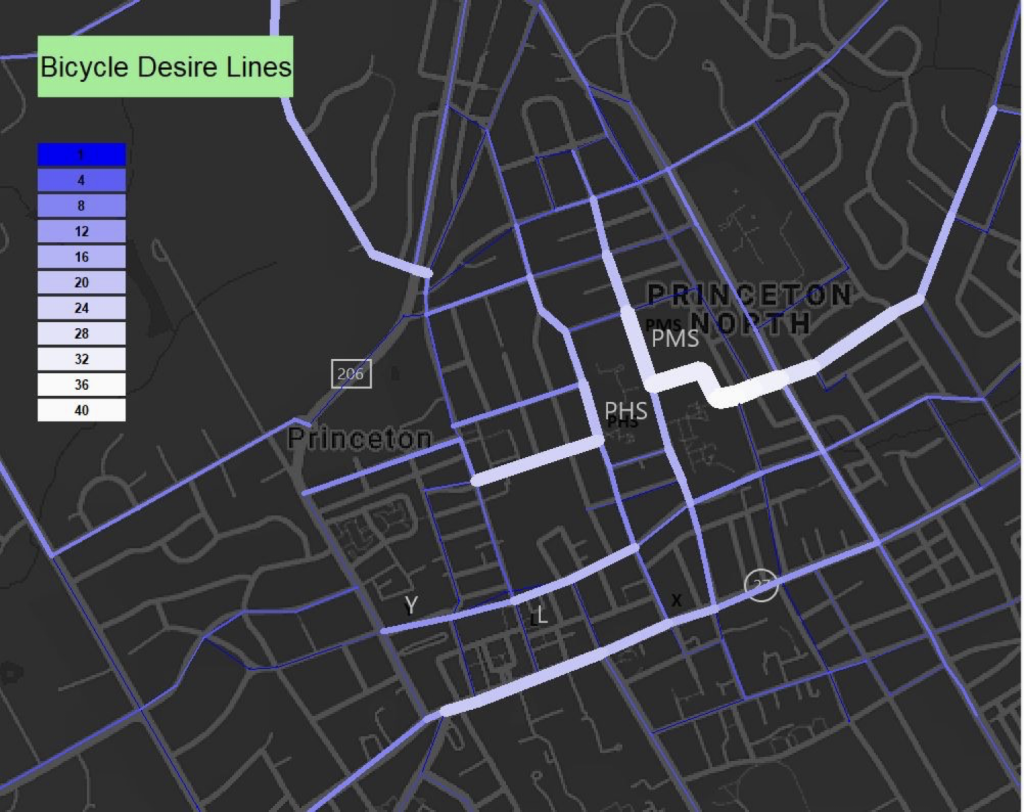
The group also recommended a crossing guard at Walnut Lane and Terhune Road, along with wider sidewalks and safer walking routes throughout the school area. These improvements would support students who walk, bike, or take transit and would help reduce the traffic congestion created by school drop-off and pick-up.
Maintenance, Visibility, and Enforcement
Small maintenance issues can create serious safety problems. Participants called for better enforcement of snow removal on sidewalks, regular trimming of hedges and vegetation to improve visibility, and clearing brush from bike lanes.
The group also noted the importance of education and enforcement. Better infrastructure is essential, but drivers, bicyclists, e-bike riders, and pedestrians also need clear expectations. Enforcement should focus on the behaviors that create the greatest danger, including speeding, failure to yield, unsafe turns, blocked sidewalks, and vehicles parked in bike lanes or near crossings.
Access Through the Shopping Center Area
The Princeton Shopping Center is an important destination, but it also functions as a key connection between neighborhoods, schools, parks, and commercial areas. Participants saw opportunities to improve access through and around the shopping center, especially through better crossings, clearer circulation, safer entrances, and improved walking and biking connections. The Center has three entry points and three exit points along Harrison, creating multiple points of conflict between drivers, pedestrians, and cyclists. Closing the entrance and exit by Nomad Pizza would greatly simplify the circulation on the western side of the Shopping Center. At a minimum, we recommend making that point an entrance only, as it was previously.
A safer PFARS-area cut-through, improved access near Grover Park, and better links between Harrison, Terhune, Alice, and nearby neighborhoods could make the area much easier to navigate without a car.
What Comes Next?
The tour showed that Princeton has already made progress, but also that much more is needed. North Harrison’s bike lanes are an important step, but they should be part of a larger connected network of safe streets, sidewalks, crossings, and bicycle routes. Walk Bike Princeton will continue to advocate for practical improvements, including:
- safer crossings and intersections;
- expanded sidewalks and shared paths;
- continuous bike lanes;
- traffic calming and lower speeds;
- safer school travel routes;
- better maintenance of sidewalks and bike lanes;
- improved education and enforcement; and
- better walking and biking access through the Princeton Shopping Center area.
We are grateful to everyone who joined the tour, shared observations, asked questions, and helped identify practical ways to make this area safer. The ideas raised during this walk and bike tour offer a clear path forward. With thoughtful design, regular maintenance, and continued community input, Princeton can make North Harrison and the Shopping Center area safer, calmer, and more welcoming for everyone. We invite more residents to add their voices at future Walk Bike Princeton events and to join our mailing list for updates, advocacy opportunities, and upcoming walks and rides.
Comments
One response to “What We Saw on North Harrison: Safer Streets Around the Princeton Shopping Center”
The town seems to be going in the opposite direction regarding bike lanes on North Harrison Street south of Franklin.
Per the presentation of the Harrison Street Corridor Study last September, the town doesn’t seem to want bikes there at all and intends to install a “center roadway median with reduced lane widths”:
https://engage.zencity.io/princeton/en-US/projects/harrison-street-corridor-study-and-improvement-projects
Meaning, it would actually be harder and more dangerous (and not recommended) to ride a bike on North Harrison Street from Nassau Street to Franklin Avenue.
Instead, the town wants cyclists to take the “bike boulevard” of Linden (steep), Murray, and Broadmead to travel north/south through the Harrison Street corridor.
Princeton’s Assistant Municipal Engineer did not seem receptive to the idea of changing this plan.